Can Dead Sea Salt and Magnesium Baths Really Relieve Joint Pain? What the Research Says
An evidence-based look at mineral baths, osteoarthritis, inflammation, and why understanding the science matters more than believing the claims.
There is something undeniably comforting about soaking in a warm bath when your joints ache. Whether you’re dealing with osteoarthritis, rheumatoid arthritis, muscle soreness, or the everyday stiffness that sometimes accompanies aging, warm water can feel wonderful.
But what happens when we add Dead Sea salts, magnesium flakes, or ordinary sea salt to that bath? Do these minerals actually reduce inflammation and joint pain? Can magnesium be absorbed through our skin? And if mineral baths really are beneficial, how much salt should we use, how warm should the water be, and how long should we soak?
These are reasonable questions, and fortunately, researchers have investigated several of them.
I routinely encourage people to look for simple, accessible ways to support their health and well-being. But I also believe we need to distinguish between something that feels beneficial, something that has been scientifically demonstrated to be beneficial, and the explanations people offer for why it works.
Those are three very different things.
Mineral Baths Are Not Just Another Wellness Trend
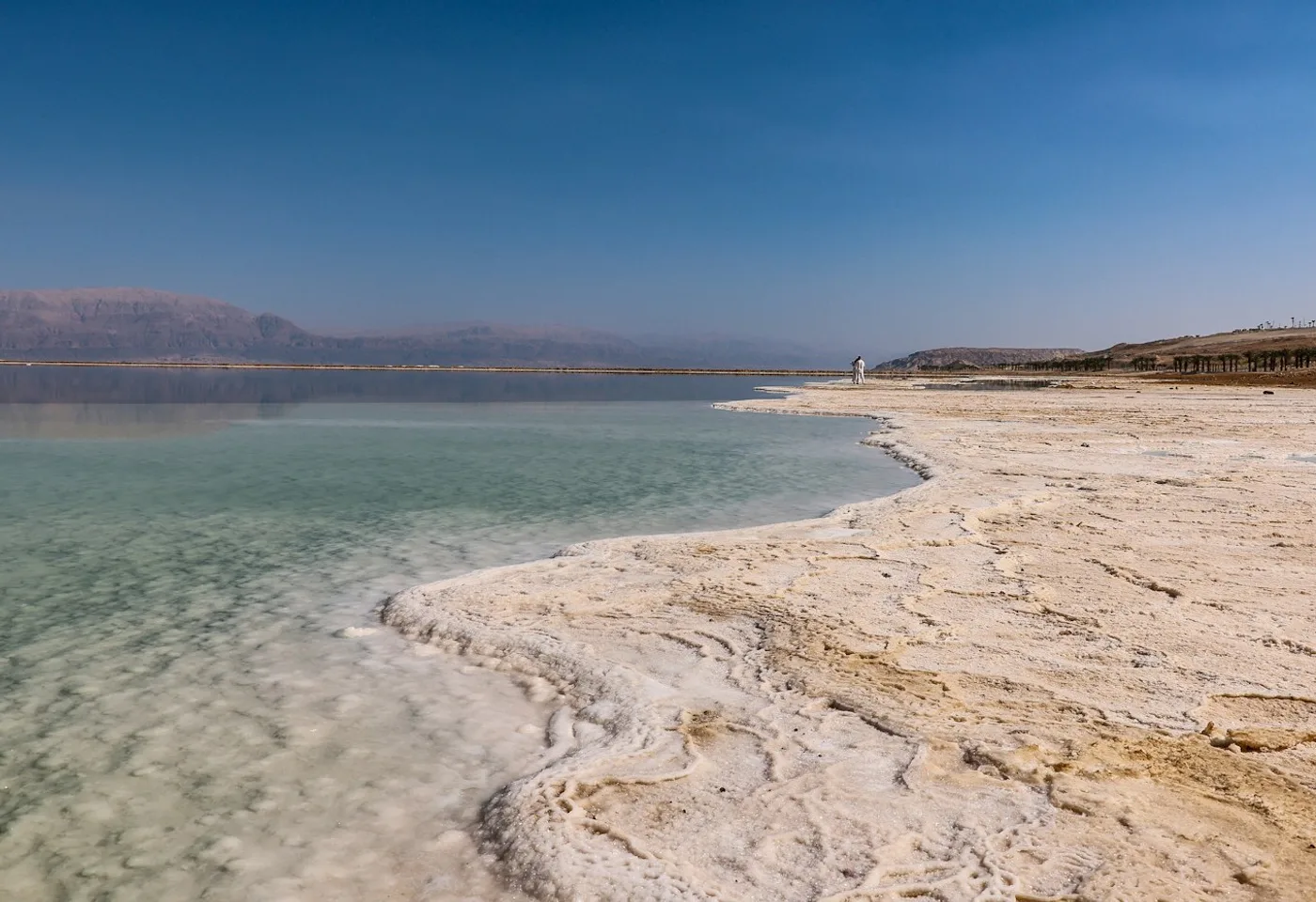
The therapeutic use of mineral-rich water, known as balneotherapy, has been practiced for centuries. People have traveled to natural mineral springs and the Dead Sea seeking relief from painful joints, skin conditions, and other ailments.
Today, we have clinical research examining whether these traditional practices actually work.
The encouraging news is that some studies have found improvements in pain, stiffness, physical function, and quality of life among people with osteoarthritis and certain inflammatory joint conditions.
However, the research also raises an important question: Are the benefits coming from the minerals, the warm water, or a combination of the two?
Understanding that distinction is essential before we start spending money on expensive bath salts or believing claims about magnesium absorption.
What Does the Research Say About Joint Pain?
Osteoarthritis: Some Encouraging Evidence
Osteoarthritis is a common joint condition involving changes in cartilage, bone, and other joint tissues. It can cause pain, stiffness, reduced mobility, and sometimes inflammation.
A small randomized, double-blind study published in 1995 compared Dead Sea salt baths with ordinary sodium chloride baths in 26 people with knee osteoarthritis.
Participants bathed for approximately 20 minutes daily in water maintained at 34–35°C (93–95°F) for two weeks.
Both groups experienced improvement in some measures, but the Dead Sea salt group demonstrated statistically significant improvement in patient-rated outcomes at the end of treatment.
This suggests that the mineral composition of Dead Sea salts might offer benefits beyond ordinary saltwater.
However, the study was small. A positive result involving 26 participants is interesting, but it is not enough to establish that Dead Sea salts are consistently superior or to determine an optimal concentration.
Research reference: Sukenik S. et al. (1995). Dead Sea bath salts for the treatment of rheumatoid arthritis and osteoarthritis. PubMed
What Do Larger Reviews Tell Us?
A 2021 systematic review and meta-analysis examined 16 studies investigating thermal mineral water therapy for osteoarthritis.
Researchers reported improvements in pain, physical function, and quality of life.
That is encouraging, particularly for people seeking nonpharmacological approaches to managing chronic discomfort.
But there is an important limitation.
The studies used different mineral waters, temperatures, treatment durations, and therapeutic settings. Some treatments occurred in specialized facilities where participants received additional interventions.
Consequently, these results do not tell us exactly how much Dead Sea salt to add to a bathtub at home.
They also cannot conclusively establish which minerals, if any, are responsible for the improvements.
Research reference: 2021 systematic review and meta-analysis of thermal mineral water therapy for osteoarthritis
What About Rheumatoid Arthritis?
Rheumatoid arthritis differs substantially from osteoarthritis.
It is an autoimmune inflammatory disease in which the immune system attacks joint tissues, potentially causing progressive damage if inflammation is not adequately controlled.
Some small studies have investigated Dead Sea bathing and other mineral therapies in people with rheumatoid arthritis.
A 1995 randomized study involving 36 participants evaluated Dead Sea bathing, sulfur baths, and combined treatments over 12 days.
Researchers observed improvements in several clinical measures, with some benefits persisting after treatment.
These findings suggest mineral bathing may provide symptomatic relief for certain individuals.
However, we need to be particularly careful about interpreting this research.
Reducing pain is not necessarily the same as controlling the underlying disease.
A person with rheumatoid arthritis might feel less stiff after a warm bath while autoimmune inflammation continues to damage the joints.
Mineral baths may be a useful complementary therapy, but they are not a substitute for medications that control rheumatoid arthritis disease activity and prevent joint destruction.
Research reference: 1995 randomized trial of Dead Sea and sulfur baths in rheumatoid arthritis
Is Magnesium the Secret Ingredient?
This is where the science becomes particularly interesting.
Dead Sea salts are naturally rich in magnesium chloride, along with potassium, calcium, sodium, and other minerals.
Magnesium is an essential nutrient involved in hundreds of biological processes, including muscle contraction, nerve signaling, energy production, and normal cellular function.
Because magnesium is so important, it is tempting to conclude that bathing in magnesium-rich water must increase magnesium levels in the body.
But that conclusion requires evidence.
Our skin is designed to be a protective barrier. It prevents excessive water loss and limits the entry of many substances from our environment.
Magnesium ions do not easily pass through intact skin in quantities known to produce clinically meaningful systemic effects.
A scientific review published in 2017 examined claims surrounding transdermal magnesium and concluded that the evidence was insufficient to support it as an effective method of magnesium supplementation.
That does not mean a magnesium-rich bath cannot be relaxing or beneficial.
It means we should not assume that its benefits come from magnesium entering the bloodstream.
There may be local effects of mineral-rich water that deserve further investigation. But those mechanisms need to be demonstrated rather than assumed.
Research reference: Gröber U. et al. (2017). Myth or Reality—Transdermal Magnesium? Nutrients, 9(8), 813. Read the research
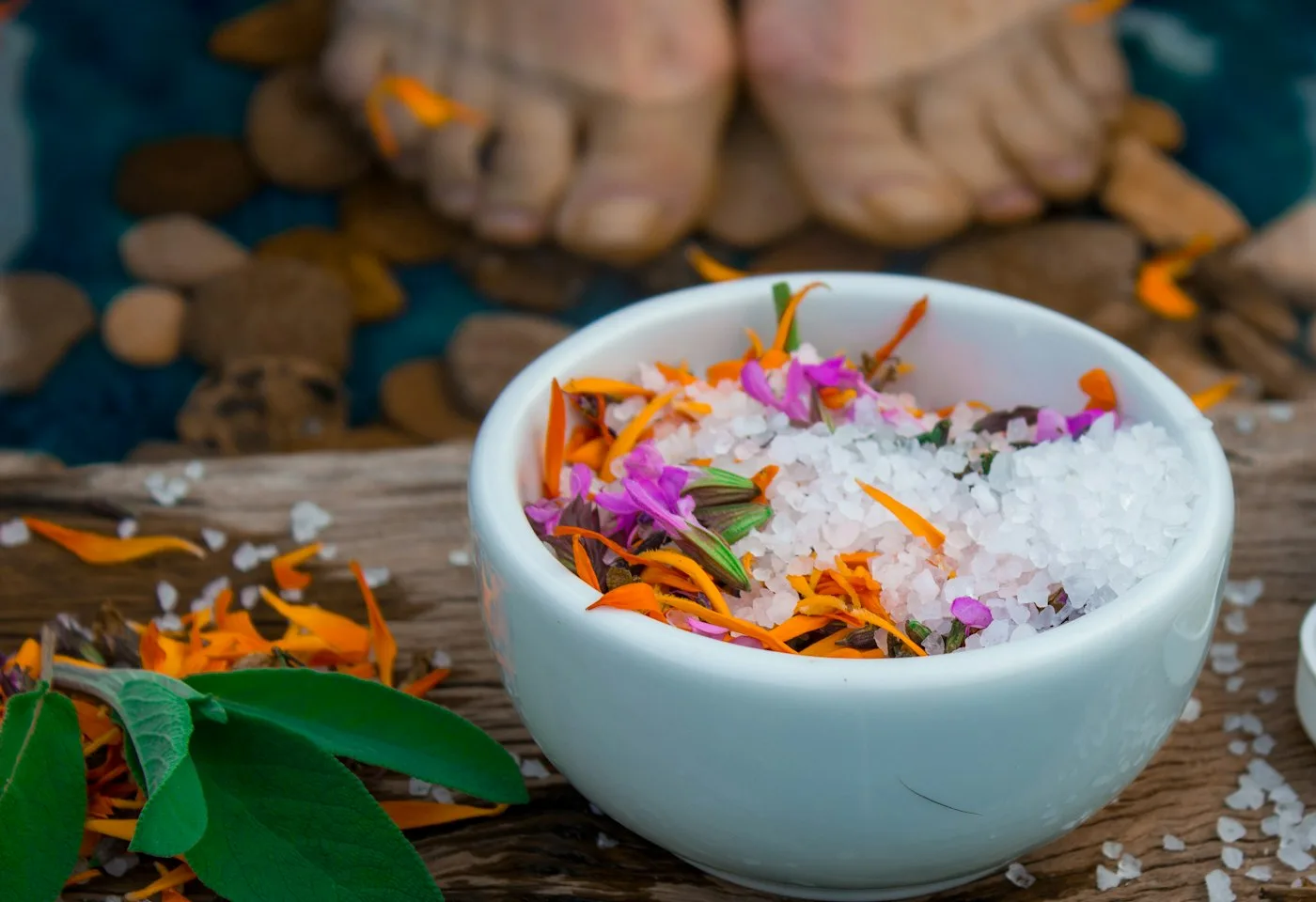
Dead Sea Salt, Epsom Salt, and Ordinary Sea Salt: Are They the Same?
Although these products are frequently discussed together, their mineral compositions differ.
| Bath additive | Primary composition | What we know |
|---|---|---|
| Dead Sea salt | Magnesium, potassium, calcium, and sodium salts, with substantial chloride | Some small clinical studies support symptom relief |
| Epsom salt | Magnesium sulfate | Little convincing clinical evidence that Epsom salt baths outperform warm water for joint pain |
| Ordinary sea salt | Predominantly sodium chloride | Insufficient evidence that it provides additional joint-pain relief beyond warm water |
| Magnesium chloride flakes | Magnesium chloride | No established therapeutic bath concentration for joint pain |
This is an important example of why we should not treat all mineral baths as interchangeable.
A study involving natural Dead Sea water cannot automatically be used to support claims about Epsom salts.
Likewise, evidence that magnesium is important for muscle function does not establish that magnesium sulfate baths reduce arthritis pain.
Each claim needs its own supporting research.
Could Warm Water Be Responsible for Much of the Benefit?
Absolutely.
Warm-water immersion has several physiological effects that may help explain why people experience relief.
Warmth can promote relaxation, improve comfort, and temporarily reduce the sensation of stiffness.
Buoyancy reduces the effective weight placed on submerged joints, making movement easier for people experiencing pain.
Hydrostatic pressure, the pressure exerted by water on the body, may influence circulation and fluid movement.
And perhaps just as importantly, spending 20 minutes resting in comfortably warm water may reduce muscle tension and help people relax.
These effects do not require expensive mineral salts.
In fact, research comparing warm saltwater baths with ordinary warm-water baths has found improvements in both groups.
That raises a question we should always ask when evaluating a treatment:
Would people have improved even without the ingredient being promoted?
This is why well-designed studies include comparison groups.
Without them, we cannot confidently determine whether a treatment works better than the simpler alternative.

How Long Should You Soak?
Although researchers have not established one universally optimal bathing protocol, several clinical studies have used similar treatment durations.
A reasonable, research-informed approach for adults who can safely tolerate warm bathing is:
- Water temperature: Approximately 93–97°F (34–36°C).
- Bath duration: About 15–20 minutes.
- Frequency: Several times weekly, with some studies using daily treatments.
- Trial period: Approximately two to three weeks to evaluate whether symptoms improve.
These are general parameters drawn from clinical research, not a proven prescription for every person or joint condition.
Hotter water is not necessarily better. Excessive heat can cause dizziness, low blood pressure, dehydration, and other problems, particularly in people with cardiovascular conditions.
People with reduced sensation, significant cardiovascular disease, open wounds, or other medical concerns should obtain individualized guidance before using prolonged warm-water immersion.
How Much Dead Sea Salt Should You Add?
This is one of the most practical questions, and also one where the available evidence is less definitive than we might like.
Unfortunately, clinical studies do not consistently report salt concentrations in ways that allow us to establish a reliable, evidence-based dose for an ordinary home bathtub.
Natural Dead Sea water contains an exceptionally high concentration of dissolved minerals, but attempting to reproduce that environment at home would require large amounts of salt and would not necessarily reproduce the conditions of clinical studies.
For perspective, a 1% salt solution requires approximately 10 grams of salt per liter of water.
A bathtub containing 40 gallons of water would therefore require approximately 3.3 pounds of salt to achieve a 1% weight-per-volume concentration.
That is a mathematical example, not a recommended therapeutic dose.
We do not have sufficient clinical evidence to conclude that a 1% concentration is better than 0.5%, 2%, or another concentration for relieving arthritis pain.
For people who enjoy mineral baths, following the manufacturer’s instructions is more reasonable than assuming that adding more salt will produce greater benefits.
How Can You Tell Whether Mineral Baths Are Helping You?
One of the simplest ways to approach this scientifically is to conduct a small personal comparison.
For example, try comfortably warm baths without added salts and record your symptoms. On other comparable days, use the same water temperature and bathing duration with Dead Sea salts.
Pay attention to several outcomes:
- Pain before and after bathing, using a 0–10 scale.
- Morning stiffness and how long it lasts.
- Ease of movement, including walking, climbing stairs, or getting out of a chair.
- How long any relief lasts after bathing.
- Whether the mineral bath produces noticeably greater relief than warm water alone.
This is not a substitute for a randomized clinical trial. Expectations, daily activity, sleep, and normal symptom fluctuations can influence the results.
But it encourages a more thoughtful approach than simply assuming a product works because someone says it does.
And if plain warm water provides the same relief, that is useful information too.
Learning to Think Critically About Health Claims
This is perhaps the most important lesson in this entire discussion.
Every day, we encounter articles, advertisements, and social media posts promoting products that supposedly reduce inflammation, eliminate pain, detoxify the body, improve circulation, or correct nutritional deficiencies.
Some claims are based on legitimate scientific findings.
Others take a small piece of scientific information and stretch it far beyond what the research actually demonstrates.
Consider the following statement:
“Magnesium is essential for normal muscle function, and Dead Sea salts contain magnesium. Therefore, soaking in Dead Sea salts delivers magnesium into your muscles and relieves joint pain.”
The first two statements are true.
Magnesium is essential for normal muscle function, and Dead Sea salts contain magnesium.
But the conclusion does not automatically follow.
To support that conclusion, researchers would need to demonstrate that meaningful amounts of magnesium enter the body during bathing and that this absorption contributes to improvements in joint pain.
Without those findings, we have an interesting hypothesis, not an established medical fact.
This is a common problem in health reporting.
A scientifically accurate statement can be used to support a conclusion that has never actually been demonstrated.
When reading health information, I encourage you to ask:
1. Was the research conducted in humans? Laboratory findings and animal studies can be valuable, but they do not automatically establish clinical benefits in people.
2. How many people participated? A study involving 20 people provides less certainty than multiple well-designed studies involving hundreds or thousands.
3. Was there a comparison group? If everyone improved after taking a bath, how do we know the minerals were responsible rather than the warm water?
4. What did researchers actually measure? Did they document reduced pain, improved mobility, changes in inflammatory markers, or simply ask participants whether they felt better?
5. Does the article accurately represent the study? An article may claim that magnesium baths reduce inflammation when the underlying study measured only self-reported pain.
6. Has the finding been replicated? One promising study is a reason to investigate further, not necessarily a reason to declare a treatment proven.
And perhaps the most important question of all:
Is the article explaining what the research actually found, or is it trying to sell me something?
Commercial involvement does not automatically invalidate research. But financial incentives make it especially important to examine the evidence carefully.
My Takeaway: Simple Therapies Can Be Valuable Without Exaggerated Claims
I believe there is a place for mineral baths as part of a broader approach to managing joint discomfort.
The research suggests that warm mineral-water bathing may help some people with osteoarthritis and other painful joint conditions.
Dead Sea salts are particularly interesting because their mineral composition differs from ordinary sea salt, and small clinical trials have reported favorable outcomes.
But we still have important unanswered questions.
We do not know whether magnesium absorption is responsible for the benefits. We do not have strong evidence establishing the ideal concentration of salts for a home bathtub. And we cannot confidently conclude that mineral salts consistently outperform warm water alone.
None of this means you should stop enjoying mineral baths.
It means you can appreciate their potential benefits while understanding the limits of the evidence.
For someone with chronic joint discomfort, a comfortably warm 20-minute bath may be a simple, enjoyable addition to an overall pain-management plan that includes appropriate exercise, strengthening, mobility work, weight management when indicated, and medical treatment when necessary.
And if you discover that adding Dead Sea salts provides greater relief, that may be worthwhile for you, even while the scientific community continues investigating exactly why.
We do not have to choose between appreciating traditional wellness practices and demanding good science. We can do both.
The goal is not to dismiss every treatment that has not yet been conclusively proven.
The goal is to understand what we know, what we suspect, and what remains uncertain.
Because making informed decisions about our health requires more than finding an article that supports what we want to believe.
It requires learning how to evaluate the evidence behind it.
Scientific References and Further Reading
1. Sukenik S. et al. (1995). Dead Sea bath salts in osteoarthritis. Randomized, double-blind clinical study. PubMed PMID: 8543232
2. Sukenik S. et al. (1995). Dead Sea bathing and sulfur baths in rheumatoid arthritis. Randomized clinical study. PubMed PMID: 7721556
3. Systematic review and meta-analysis (2021). Thermal mineral water therapy for osteoarthritis. PubMed PMID: 33530266
4. Gröber U., Werner T., Vormann J., Kisters K. (2017). Myth or Reality—Transdermal Magnesium? Nutrients, 9(8), 813. Read the research
5. Verhagen A.P. et al. (2007). Balneotherapy for osteoarthritis. Cochrane Database of Systematic Reviews. Search the Cochrane Library.
6. U.S. Department of Veterans Affairs and Department of Defense. (2026). VA/DoD Clinical Practice Guideline for the Management of Osteoarthritis of the Hip and Knee. Find the guideline.
South County Microspa | Evidence-Based Skin Health, Wellness & Healthy Aging
This article is intended for educational purposes and does not replace individualized medical advice. Persistent or worsening joint pain, unexplained swelling, fever, or a hot, red joint warrants medical evaluation.
About the writer
Cathy Estrella, MPH
Cathy Estrella is a graduate of Loma Linda School of Public Health and has been a practicing health educator/clinician for more than two decades.