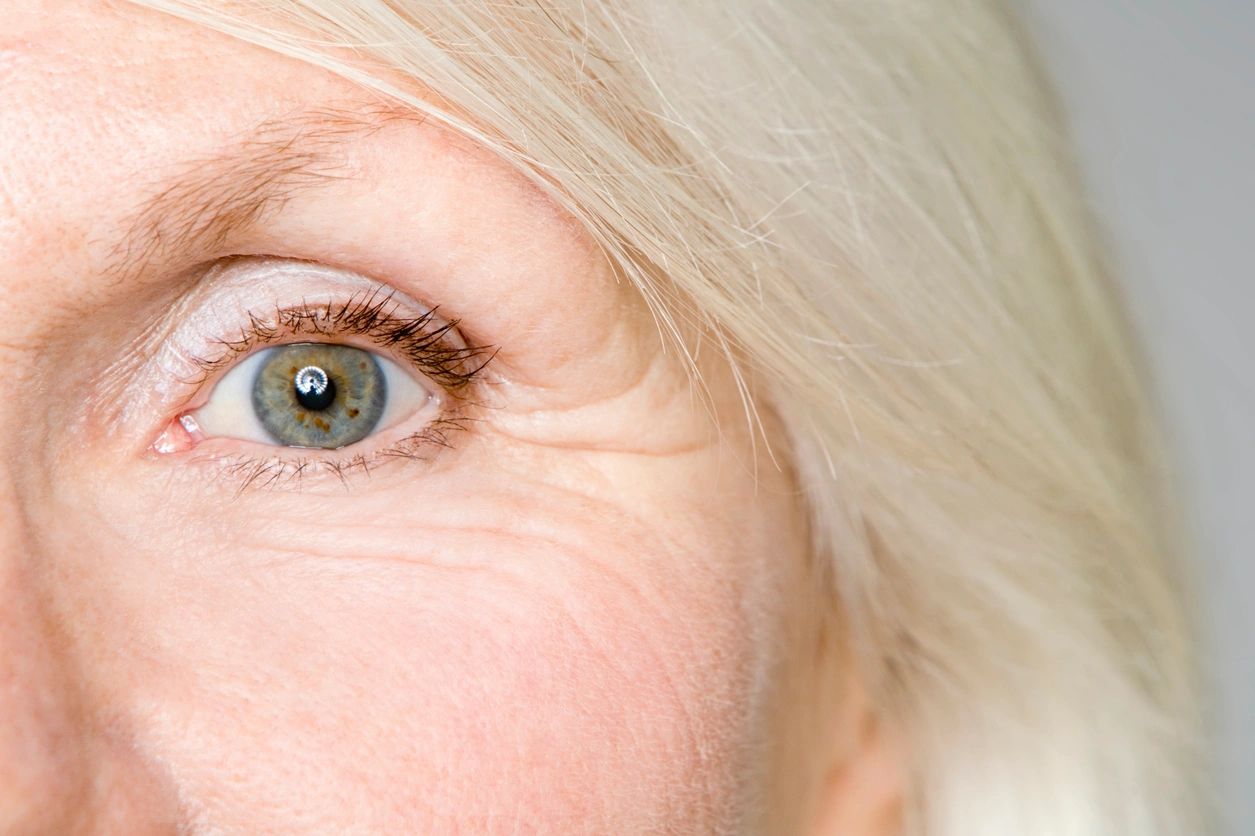
How to Tighten Skin Without Surgery
Reducing Wrinkles & Laxity Without Lasers
Every day, women search for the same things.
How to tighten skin that has started to loosen along the jaw. How to reduce wrinkles that have settled in around the eyes and mouth. How to get rid of age spots. How to restore the firmness and luminosity that used to be effortless. How to look genuinely younger — not pulled, not frozen, not overdone — just like themselves again, at their best.
The answers they find are often overwhelming, frequently contradictory, and sometimes quietly dangerous.
This article is written for the woman who is done being confused by marketing. Who wants to understand not just what works, but why — so she can make decisions about her skin with the same intelligence she applies to everything else in her life.
What Is Actually Happening When Skin Ages
Aging skin is not a surface problem. It is a biological one.
In younger skin, a specialized cell called a fibroblast is highly active. Fibroblasts are the architects of the dermis — the deeper layer of skin responsible for its firmness, elasticity, and structural integrity. They continuously produce collagen and elastin, the proteins that give skin its density and resilience, and they maintain the extracellular matrix — the intricate molecular scaffolding that holds the dermis together and facilitates communication between cells.
Beginning in our thirties, fibroblast activity measurably slows. Collagen production declines at approximately one percent per year. Elastin fibers become disorganized and brittle. The extracellular matrix thins. Epidermal cell turnover lengthens, which is why skin loses its natural luminosity and begins to look dull. Microcirculation weakens, reducing the delivery of oxygen and nutrients to skin cells. The barrier function — the skin's ability to retain moisture and protect itself from environmental stress — begins to falter.
The visible results are familiar: fine lines deepen into wrinkles. Skin along the jaw and neck begins to loosen. The cheeks lose their fullness. Texture becomes uneven. Brown spots and discoloration accumulate. The skin looks tired in a way that sleep no longer fixes.
None of this is superficial. It is cellular. And it cannot be meaningfully addressed by treatments that work only at the surface level, or by technologies that damage the skin's deeper architecture in the name of stimulating it.
Why a Facelift, While Valuable, Does Not Solve the Whole Problem
A well-executed facelift is a genuinely excellent surgical intervention for the right candidate. It restores facial contour, corrects jowling, redefines the jawline, and repositions descended tissue in ways that no topical product or energy device can fully replicate.
But a facelift does not change the biology of the skin itself.
The skin sitting over a lifted face still contains the same aging fibroblasts. The same thinning dermis. The same compromised barrier. The same slowed collagen production. Which is why, in the months and years following even a beautifully executed facelift, the skin can still appear crepey, thin, and dull — repositioned, yes, but not renewed at the cellular level.
What Actually Reverses Skin Aging
The treatments that produce real, lasting improvements are those that work at the biological level — that give the skin what it needs to repair itself, rather than simply damaging it and waiting for a wound-healing response.
Dermal matrix regeneration — Treatments like Dermatude™ Meta-Therapy and NeoGenesis® growth factor serums target the extracellular matrix directly, providing the raw materials fibroblasts need to rebuild collagen and elastin in a organized, physiological way.
Cellular energy support — LIGHTWAVE® LED therapy works through a mechanism called photobiomodulation. Red and near-infrared wavelengths penetrate the dermis and stimulate mitochondrial ATP production — the cellular energy currency that powers collagen synthesis, repair, and barrier maintenance.
Progressive structural remodeling — NeoFusionLift™ addresses structural laxity at a deeper level, producing a natural contraction and reorganization of skin tissue without the risks of ablative treatments or the limitations of surface-only protocols.
Barrier restoration — Without an intact, functioning barrier, no treatment works properly. We prioritize barrier health as the foundation of every protocol.
The results of a biology-first approach are different from the results of a damage-first approach. They are progressive rather than dramatic. Cumulative rather than temporary. And they tend to hold — because they reflect a genuine improvement in how the skin is functioning, not just how it looks on the day of treatment.