How to Look Younger Without Botox or Fillers
The aesthetic conversation has shifted. More people want results — and a natural look. Here's what non-injection anti-aging actually looks like.
Something has shifted in how people think about aesthetic treatments.
It's not that Botox and fillers have disappeared — far from it. But a meaningful and growing portion of women in their 40s and 50s are stepping back from injections. Some never wanted them to begin with. Some tried them and didn't like the result — the frozen expression, the overfilled look, the need to return every three to six months to maintain an effect that felt increasingly artificial. Some simply want something that feels more like them.
This is not a fringe position. It's one we hear repeatedly from new clients at our South Orange County practice.
Why the Injection Model Has Limits
Neuromodulators like Botox work by temporarily paralyzing targeted muscles — relaxing the contractions that create dynamic wrinkles. This is genuinely effective for specific areas — forehead lines, crow's feet — when used conservatively and skillfully.
The limitations emerge over time. Repeated cycles of paralysis and re-injection gradually alter the character of facial movement. The cumulative effect can shift from natural to "done" in ways that are difficult to undo. And because the treatment is temporary — requiring maintenance every 3–6 months — the compounding of repeated injections becomes an increasing commitment.
Fillers present a different set of trade-offs. When placed skillfully in appropriate volume, they restore youthful contour. Over-injected, they produce the "pillowface" look that has become culturally associated with aging aesthetics. They also migrate over time — particularly in areas with significant muscle movement — producing distortion that sometimes worsens appearance rather than improving it.
None of this means injections are wrong for everyone. They are the right choice for some people in some situations. But they are not the only path.
What Non-Injection Anti-Aging Actually Does
The honest starting point is understanding what injections are addressing — and whether the same result can be achieved differently.
Facial aging is primarily structural: declining collagen and elastin, weakening facial musculature, thinning dermis, shifting fat pads. Botox addresses the muscular component of dynamic wrinkling. Fillers address volume loss. Neither addresses collagen depletion, skin thinning, or the underlying tissue quality that determines how the face ages over time.
Regenerative approaches work differently — and in some cases, more fundamentally:
Medical-grade microcurrent (MyoLift MD®) re-educates facial muscles rather than paralyzing them. Precise electrical current at therapeutic frequencies stimulates muscle re-education — improving resting tone, restoring facial architecture, and producing genuine lift that is cumulative across a series of treatments. Many clients describe the effect as "my face looks more awake and lifted without looking done."
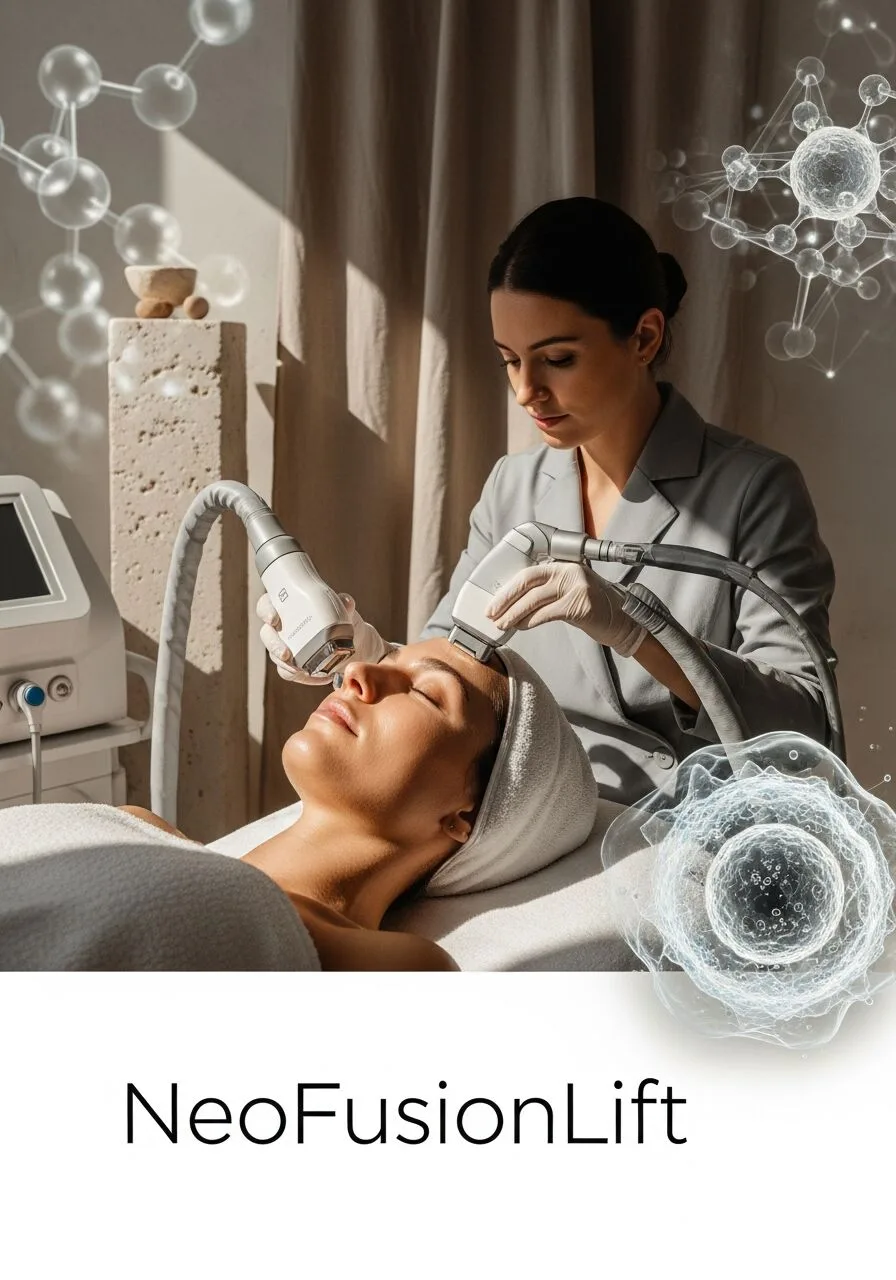
The NeoFusionLift™ Protocol is our proprietary multi-energy combination that works at the muscle, skin, and tissue level simultaneously — producing structural lifting through synergistic application of microcurrent, ultrasonic, and high-frequency energies. It is the closest non-injection equivalent to what fillers and neuromodulators are each doing in isolation.
Fusion Plasma® for structural remodeling initiates real collagen production and tissue contraction — addressing the dermal thinning and structural laxity that neither Botox nor fillers actually treats. The results develop over weeks as new collagen is synthesized and mature over months.
LED photobiomodulation supports the cellular environment in which all of the above produces more lasting results — reducing the inflammatory load that is simultaneously degrading collagen and accelerating aging.
What to Realistically Expect
This needs to be said directly: regenerative, non-injection approaches do not produce results as quickly as injections, and they require more consistent commitment. Botox produces visible results within 1–2 weeks. Microcurrent series take 6–12 sessions to produce their most significant structural improvement. Plasma remodeling results develop over weeks post-treatment.
What you gain in return is a result that looks like you — not altered, not frozen, not filled — but measurably healthier, more defined, and more rested. Because the results come from your own biology, they integrate seamlessly into your natural expression.
In South Orange County, we see a consistent profile: clients who have been maintaining Botox and filler relationships for 5–10 years and want to transition to something that builds their skin's health rather than requiring perpetual maintenance. The transition is entirely manageable with the right protocol — and most clients are pleased with what they find on the other side.
If you're curious whether this approach is right for your goals and your skin, a consultation is the best starting point. We'll give you an honest assessment of what regenerative aesthetics can realistically achieve for you — and where, if anywhere, the two approaches might be complementary.