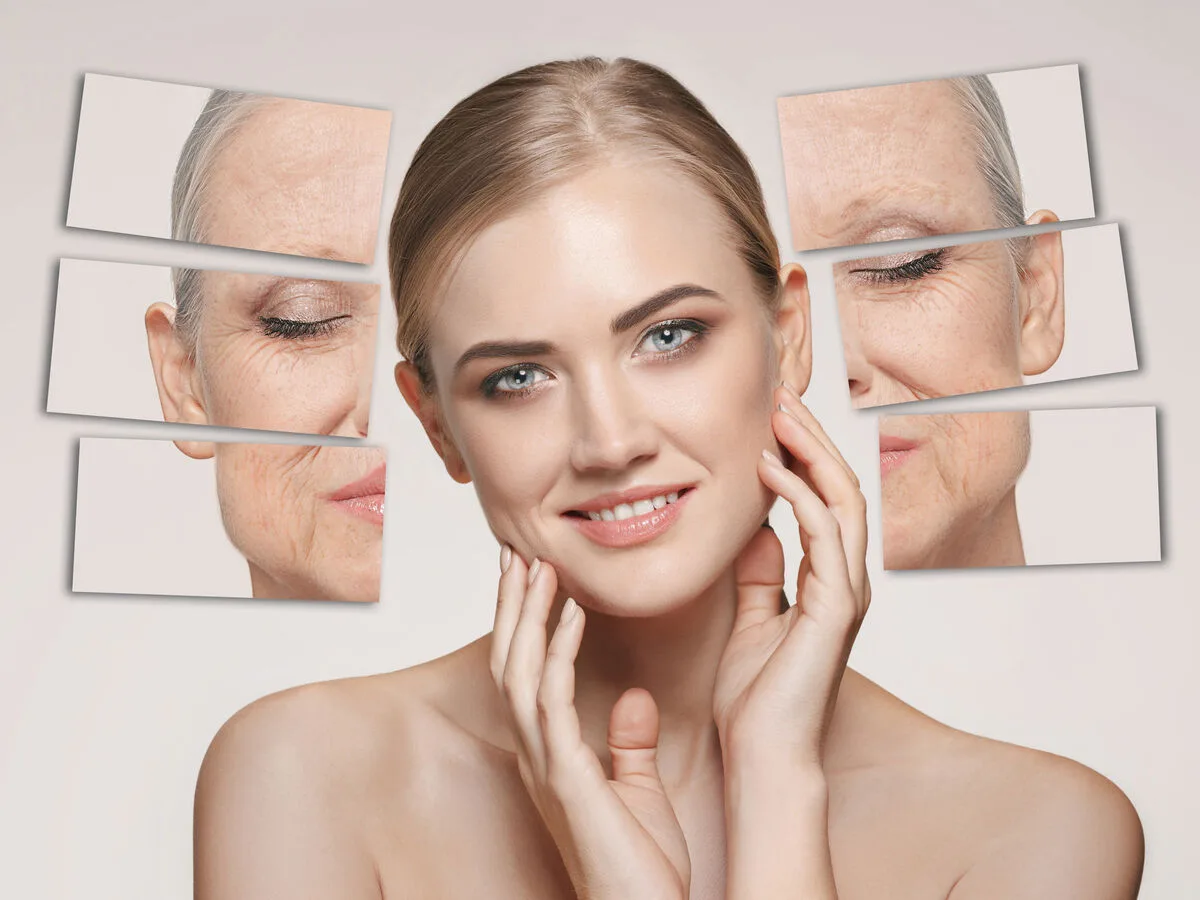
Why Your Face Looks Older Even When You Feel Great
The disconnect between how you feel and how you look is not in your head. Here's what's driving it.
You feel healthy. You're sleeping reasonably well, eating thoughtfully, staying active. By most measures, you feel younger than your chronological age.
And then you catch a glimpse of yourself in a photograph, or in unfamiliar lighting, and the face looking back at you doesn't match the way you feel inside.
You're not alone in this experience. And the disconnect is not vanity — it's biology. The face ages through a series of structural changes that are largely independent of how healthy or energetic you feel. Understanding what's actually driving those changes is the first step toward addressing them effectively.
Your Face Ages in Layers — Not All at Once
One of the most important things to understand about facial aging is that it happens at multiple tissue depths simultaneously — and not all of them are visible until enough change has accumulated.
At the skin surface, collagen and elastin fibers break down gradually, producing visible lines, rougher texture, enlarged pores, and thinner skin that tents and creases more easily.
In the dermis, cellular energy declines as mitochondria become less efficient — slowing repair, reducing the skin's ability to produce healthy new collagen, and diminishing the skin's response to damage.
In the subcutaneous fat layer, discrete fat compartments that create youthful facial fullness thin and descend. This contributes to hollowing under the eyes, flattening of the midface, and the heaviness that accumulates along the jawline and jowl.
At the muscle level, facial muscles gradually lose tone and shift position over decades. The overlying skin and soft tissue follow — contributing to brow descent, nasolabial deepening, and the softening of defined features.
At the bone level, the facial skeleton itself changes with age — with subtle remodeling around the eye socket, the jaw, and the chin that alters the surface geography above it.
No single cream or treatment addresses all of these layers. This is why comprehensive, multi-modal approaches to facial aging are increasingly standard in regenerative aesthetics — and why single-ingredient skincare has such limited effect on true structural aging.
The Silent Driver Most People Don't Know About
If you feel healthy but look older than you feel, there's a good chance that inflammaging is part of the equation.
Inflammaging — chronic low-grade systemic inflammation — is one of the most significant drivers of accelerated facial aging, and one of the least discussed. Unlike acute inflammation (a sprained ankle, a wound), inflammaging produces no obvious symptoms. No heat, no swelling, no pain. It simply operates beneath the surface, continuously degrading structural proteins, disrupting cellular repair, and accelerating the decline of skin architecture.
What drives it? Multiple factors compound:
- Chronic stress and elevated cortisol — cortisol directly degrades collagen and suppresses the skin's regenerative capacity
- Processed diet and blood sugar dysregulation — glycation (the binding of sugar to proteins) damages collagen fibers, making them stiff, disorganized, and less functional
- Sleep deficit — the majority of skin repair occurs during sleep; chronic disruption creates a repair deficit that compounds over years
- UV exposure — even modest daily UV without protection accumulates DNA damage, oxidative stress, and collagen-degrading enzyme activity
- Hormonal transitions — particularly the decline of estrogen during perimenopause, which removes a key regulator of collagen production and inflammatory signaling
The frustrating part is that these drivers can operate even in people who feel healthy and energetic. You can have excellent cardiovascular fitness and still carry significant inflammaging load. The two systems don't always align.
Why "Good Genes" Don't Always Show in the Face
People often attribute their appearance to genetics — and genetics does play a role. But research increasingly shows that environmental and lifestyle factors have a greater influence on visible facial aging than most people realize.
Identical twin studies consistently demonstrate that the twin with greater UV exposure, higher chronic stress, poorer sleep patterns, or smoking history looks meaningfully older than their genetically identical sibling — sometimes by a decade or more.
What this means is that the gap between how you feel and how you look is often more addressable than it is predetermined. The structural decline is real. But so is the capacity for structural improvement, when the right biological interventions are applied.
What Can Actually Be Done
Effective facial aging intervention — the kind that produces visible structural change rather than temporary surface effects — requires working at the tissue levels where the change is occurring.
At South County Microspa, that means:
- Objective baseline measurement with Miravex Antera 3D® clinical imaging — so we know exactly what's happening in your skin before making a single treatment recommendation
- Metabolic health assessment with InBody 580® — because internal inflammatory burden and body composition directly affect how the skin ages and how it responds to treatment
- Collagen remodeling interventions that work at the dermal and subdermal level — not just the surface
- Cellular energy support through LED photobiomodulation — improving the biological environment in which structural change occurs
- Consistent protocol design — because structural improvement accumulates over time and requires a maintained foundation
The disconnect between how you feel and how you look is frustrating precisely because it feels unjust. If you're doing the right things for your health, your face should reflect it.
With the right approach, it can.